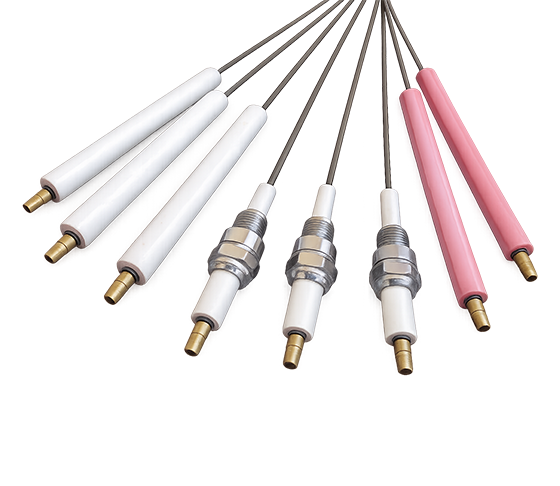
Ignition Electrode

An ignition electrode is a key component used in burner ignition systems to create the spark needed to ignite the air-fuel mixture. It works together with an ignition transformer to produce a high-voltage spark.

During burner startup, the ignition electrode generates a controlled spark at the burner head. This spark ignites the fuel-air mixture, initiating stable combustion.

Industrial ignition electrodes are built with heat-resistant ceramic insulation and durable metal rods. They are designed to operate reliably in high-temperature environments such as boilers, furnaces, and industrial heating equipment.

Technical Specifications

  • Component Type: Ignition Electrode
  • Electrode Material: Stainless steel / heat-resistant alloy
  • Insulator Material: High-temperature ceramic
  • Ignition Voltage: Typically 5 – 15 kV
  • Temperature Resistance: Up to 1000°C (typical)
  • Mounting: Burner head mounting
  • Compatibility: Gas burners, oil burners, dual-fuel burners
  • Application: Industrial burner ignition systems
Applications / Industries Served

Applications of Ignition Electrodes

  • Industrial gas burner systems
  • Oil-fired burner ignition systems
  • Boilers and steam generators
  • Industrial furnaces
  • Ovens and dryers
  • Thermal processing equipment
  • Chemical and petrochemical plants
  • Food processing heating systems
Key Benefits / Features

Key Features of ECCS Ignition Electrodes

  • Generates reliable ignition spark for burner startup
  • High-temperature resistant materials for durability
  • Ensures quick and stable ignition of fuel-air mixture
  • Ceramic insulation provides electrical safety
  • Compatible with industrial ignition transformers
  • Designed for continuous industrial operation
  • Easy installation and replacement
  • Long service life in demanding combustion environments
×