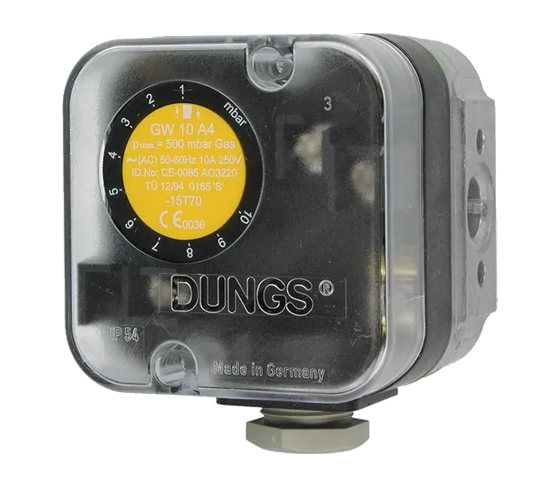
Gas Pressure Switch

A gas pressure switch is a safety device used in industrial gas burner systems to monitor the pressure of the incoming gas supply. It ensures that the burner operates only when gas pressure is within the safe operating range.

The switch continuously detects gas pressure and sends a signal to the burner controller. If the pressure becomes too low or too high, the switch triggers a safety shutdown to prevent combustion issues.

Gas pressure switches are widely installed in gas pipelines, valve trains, and burner gas supply systems. They play an important role in maintaining safe and stable combustion in industrial heating equipment.

Technical Specifications

  • Device Type: Gas Pressure Switch
  • Pressure Range: Typically 5 – 500 mbar (adjustable)
  • Gas Type: Natural gas / LPG
  • Electrical Contact: SPDT switching contact
  • Operating Voltage: Compatible with burner control circuits
  • Housing Material: Industrial polymer or aluminum
  • Mounting: Gas pipeline or valve train mounting
  • Application: Industrial gas burner systems
Applications / Industries Served

Applications of Gas Pressure Switches

  • Industrial gas burner systems
  • Gas valve train safety systems
  • Boilers and steam generators
  • Industrial furnaces
  • Ovens and dryers
  • Thermal processing equipment
  • Chemical and petrochemical plants
  • Food processing heating systems
Key Benefits / Features

Key Features of ECCS Gas Pressure Switches

  • Monitors gas pressure for safe burner operation
  • Detects both low and high pressure conditions
  • Ensures automatic burner shutdown during abnormal pressure
  • Adjustable pressure setpoints for different systems
  • Reliable switching performance in industrial environments
  • Compact design for easy installation in gas lines
  • Compatible with most burner control systems
  • Improves overall combustion safety
×