Stress Relief Furnace

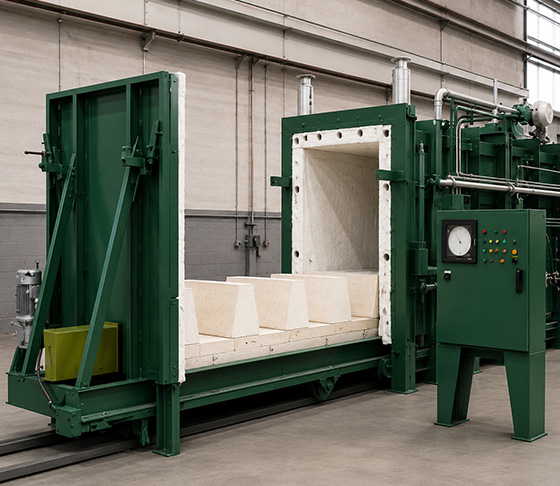
ECCS Stress Relief Furnaces are designed for controlled heat treatment to reduce internal stresses in metal components. Built for uniform heating and precise temperature control, they ensure reliable stress relieving in industrial processes.

Stress Relief Furnace

ECCS Stress Relief Furnaces are industrial heat treatment systems used to reduce residual stresses in metals after processes such as welding, casting, forging, or machining. This treatment improves dimensional stability and structural reliability of metal components.

The furnace heats the material to a specific temperature below its critical transformation point and maintains that temperature for a controlled duration. This allows internal stresses within the metal structure to relax gradually.

Designed for industrial reliability, ECCS stress relief furnaces provide uniform temperature distribution and precise control. They are widely used in manufacturing industries where high-quality metal components require controlled heat treatment.

Technical Specifications

  • Furnace Type: Stress Relief Furnace
  • Heating Method: Gas burner / electric heating
  • Temperature Range: Up to ~650°C
  • Furnace Design: Batch / continuous type
  • Temperature Control: Digital controller / PLC system
  • Heating System: Gas burners or electric heating elements
  • Insulation: High-temperature refractory insulation
  • Construction Material: Steel outer body with refractory lining
  • Atmosphere Control: Optional protective atmosphere
  • Application: Metal stress relieving heat treatment
Applications / Industries Served

Applications of Stress Relief Furnaces

  • Metal fabrication industries
  • Welding and fabrication plants
  • Automotive component manufacturing
  • Pressure vessel manufacturing
  • Structural steel manufacturing
  • Oil and gas equipment fabrication
  • Engineering manufacturing plants
  • Industrial heat treatment facilities
Key Benefits / Features

Key Features of ECCS Stress Relief Furnaces

  • Reduces internal stresses in metal components
  • Improves dimensional stability and strength
  • Uniform temperature distribution inside the furnace
  • Precise temperature control for heat treatment
  • Durable refractory-lined furnace construction
  • Energy-efficient heating system
  • Suitable for various metal components and alloys
  • Reliable operation for industrial heat treatment processes
×