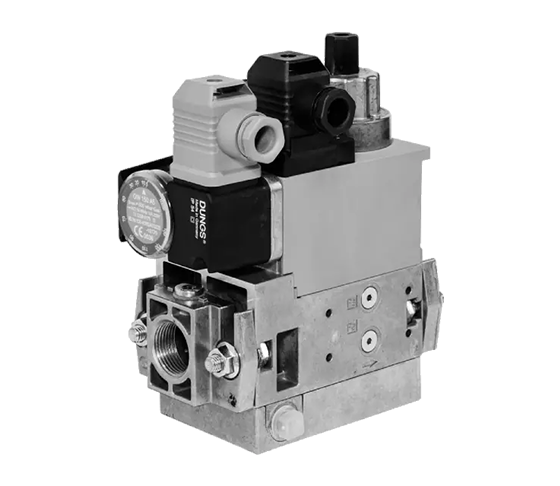
Gas Solenoid Valve

A gas solenoid valve is an electrically operated valve used to control the flow of gas in industrial burner systems. It opens or closes automatically based on signals from the burner controller.

During burner startup, the controller energizes the solenoid valve to allow gas to flow to the burner. If a fault occurs, such as flame failure or abnormal pressure, the valve immediately closes to stop gas flow.

Gas solenoid valves are essential components in burner gas trains and combustion control systems. They provide reliable and fast gas shut-off to maintain safety in boilers, furnaces, and industrial heating equipment.

Technical Specifications

  • Device Type: Gas Solenoid Valve
  • Operation: Electrically operated automatic valve
  • Gas Type: Natural gas / LPG
  • Operating Voltage: Typically 24V / 110V / 230V AC
  • Pressure Rating: Up to 500 mbar (typical)
  • Valve Body Material: Aluminum / brass
  • Connection Type: Threaded or flanged
  • Application: Industrial gas burner systems
Applications / Industries Served

Applications of Gas Solenoid Valves

  • Industrial gas burner systems
  • Gas valve train assemblies
  • Boilers and steam generators
  • Industrial furnaces
  • Ovens and dryers
  • Thermal processing equipment
  • Chemical and petrochemical plants
  • Food processing heating systems
Key Benefits / Features

Key Features of ECCS Gas Solenoid Valves

  • Provides automatic control of gas flow in burner systems
  • Fast shut-off response for enhanced safety
  • Reliable operation in industrial environments
  • Compatible with burner controllers and safety systems
  • Durable construction for continuous operation
  • Compact design for easy installation in gas pipelines
  • Supports safe ignition and burner shutdown sequences
  • Long service life with minimal maintenance
×