
Call Us: +91-9999966276 Parts & Service: +91-9999937733
The Impact of AI and Data Collection on Retail Transformation

Industry Perspectives: How retail leaders are harnessing AI and data for competitive advantage
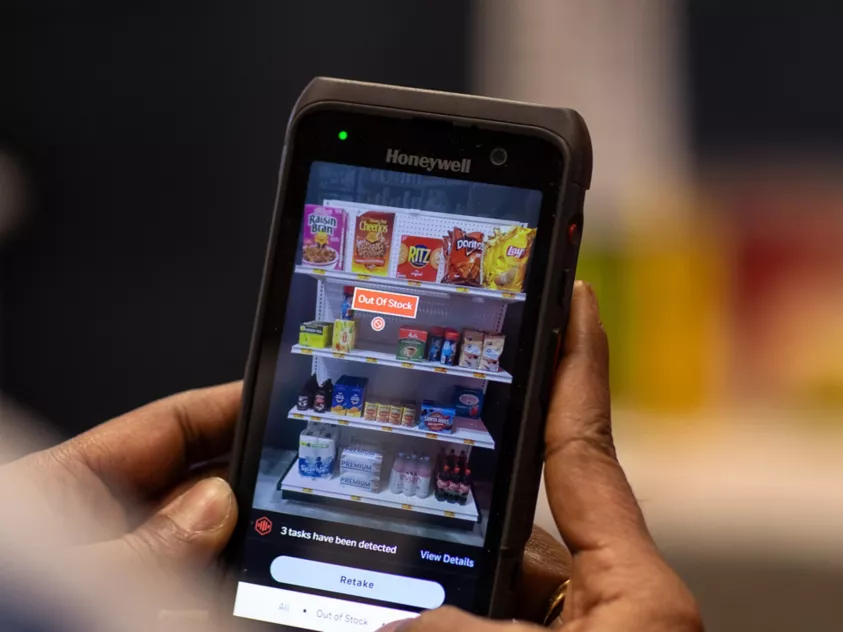
Artificial Intelligence (AI) is no longer just a buzzword in retail – it’s rapidly becoming the backbone of innovation, efficiency and customer engagement. According to the Global Retailer Technology Survey, executed by Honeywell and Wakefield Research, AI is driving a significant transformation across the industry, reshaping everything from customer service to supply chain management. Retail executives are not only embracing AI as a core element of their business strategy but are also leveraging advanced data capture technologies to ensure high-quality, actionable information is at the heart of their operations.
AI Takes Center Stage in Retail Business Strategy
The retail industry’s adoption of AI is widespread and accelerating. Research reveals that 85% of retail executives have already developed AI capabilities and solutions, with 60% actively expanding them. Only 1% of global retail leaders have not adopted AI-based solutions or are not evaluating them, indicating near-universal recognition of AI’s value.
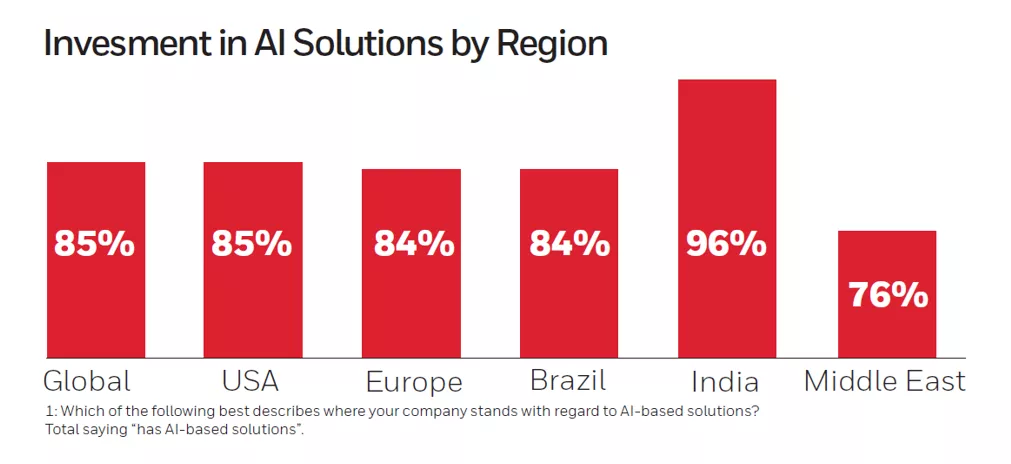
Retailers are dedicating significant resources to AI, with more than half (53%) planning to invest in AI capabilities over the next several years. This momentum is reflected across key markets like United States, Europe, Brazil, India, and the Middle East, underscoring the global nature of this technological revolution. For 89% of surveyed executives, investment in AI is either underway or planned within one to two years. This demonstrates a sense of urgency and commitment to integrating AI into their strategic roadmap.
Drivers Behind AI Adoption
The motivations for embracing AI are clear and strategic. Retail executives identify three primary motivators for implementing AI-based solutions:
- Achieving hyper-personalized customer experiences (34%)
- Optimizing supply chain and last mile operations (33%)
- Smarter inventory and demand forecasting (33%)
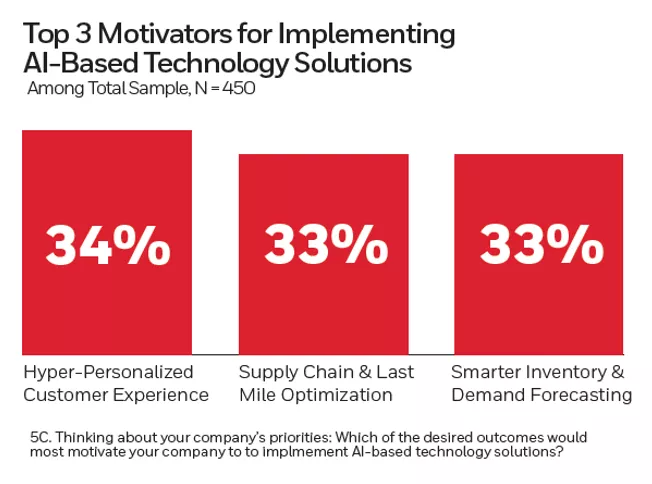
These priorities reflect a balanced approach, targeting both customer-facing and back-office improvements. In regions like the U.S. and Brazil, delivering hyper-personalized experiences is especially critical, with 40% of retailers in each market prioritizing this outcome. Meanwhile, Indian retailers lead in AI investment (96%), highlighting a strong appetite for technological innovation.
AI’s Impact Across Business Functions
AI is transforming all aspects of retail, boosting customer service, shopper experiences, marketing, demand planning and logistics. Executives expect the largest impact in marketing and customer engagement, with C-suite leaders particularly optimistic about improvements in these areas.
Automation: Streamlining Retail Operations
Automation is a recurring theme in the research, with 70% of retailers having completely or mostly automated their data capturing processes. This automation minimizes manual intervention, reduces errors, and accelerates workflows. The benefits are tangible: 80% of executives at companies with mostly or fully automated data capture rate their ability to obtain trusted, high-quality data as “very strong.” This confidence is even higher (83%) among companies with an IT function dedicated to AI.
Still, nearly half (46%) of executives describe their data capture as only “somewhat or a bit” automated, highlighting opportunities for further investment and optimization. As retailers continue to automate, their ability to leverage AI and advanced analytics will only grow stronger.